


Shadows Over the Valley: Understanding How Displacement Was Engineered
Tikoo argues that the exodus was not a spontaneous outcome of local unrest but the result of a long sequence of strategic, political, and institutional decisions taken over many years

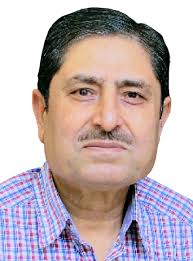 By Rajinder Premi
Public discussion about the Kashmiri Pandit exodus often begins and ends with January 1990. Fearful nights, sudden departures, and shattered lives dominate the narrative. While these moments deserve remembrance, they do not explain how an entire community reached that breaking point. Shadows Over the Valley by Rohit Tikoo sets out to answer that missing question.
This book does not describe an event in isolation. It examines a process. Tikoo argues that the exodus was not a spontaneous outcome of local unrest but the result of a long sequence of strategic, political, and institutional decisions taken over many years. That approach immediately separates this work from much of the existing literature.
The author begins outside Kashmir. He traces the Cold War context that reshaped South Asia, particularly the transformation of Afghanistan into a battlefield of proxy warfare. He explains how ideological mobilisation, intelligence operations, and militant infrastructure developed during this period did not disappear once global attention shifted. Instead, these mechanisms were redirected toward Kashmir. The argument is presented clearly, without jargon or exaggeration, making complex geopolitics accessible to general readers.
One of the book’s strongest sections deals with the role of Pakistan’s intelligence establishment. Tikoo does not rely on rhetoric. He outlines organisational structure, recruitment models, training pipelines, and infiltration methods with precision. This approach replaces abstraction with clarity. Terrorism appears not as chaos but as administration. Readers see how violence acquires continuity when supported by systems rather than impulses.
The book also examines failures closer to home. Tikoo documents how political authority inside Jammu and Kashmir weakened steadily through the late 1980s. Governance faltered. Law enforcement retreated. Intelligence warnings failed to translate into protection. When elected leadership collapsed, the state lost its capacity to shield civilians. What followed was not immediate collapse, but paralysis. That paralysis proved fatal for vulnerable communities.
The chapters dealing with January 1990 reflect discipline and restraint. Tikoo does not seek emotional shock. He records intimidation, uncertainty, and fear as lived realities rather than dramatic episodes. The emphasis remains on process. How threat turned public. How confidence collapsed. How ordinary families concluded that safety no longer existed. For Kashmiri Pandits, identity itself became a risk. The decision to leave emerges not as panic but as forced calculation.
Exile occupies a central place in the book. Tikoo describes displacement as a long condition rather than a temporary phase. He writes about loss of livelihood, broken education, erosion of social structure, and prolonged dependence. Camps in Jammu represent not refuge, but waiting. These sections avoid sentimentality and gain strength from understatement. Suffering appears credible because it is not inflated.
The book does not suggest that violence touched only one group. It recognises that civilians across communities suffered when authority collapsed. At the same time, it explains why Kashmiri Pandits bore a distinct burden. Small in number, lacking political influence, and dispersed across neighbourhoods, they could not demand protection or shape outcomes. When systems fail, minorities fall first. The book explains this pattern without hostility or accusation.
The author also addresses the years after the exodus. Targeted killings, massacres, and unresolved cases puncture any claim that time delivered justice. Tikoo records names and places not as symbols, but as unanswered questions. He shows how accountability remained absent and how return became increasingly theoretical rather than practical.
For readers with personal loss, this documentation carries particular weight. My own father, Sarvanand Kaul Premi, a poet who believed in shared cultural space, was killed during those years along with his young son. I read this book not for emotional affirmation but to see whether history had finally been examined with seriousness. In that respect, the book succeeds.
Shadows Over the Valley avoids political slogan and communal framing. It does not offer simple villains or comforting conclusions. Instead, it insists on sequence, responsibility, and evidence. It argues that communities do not disappear overnight. They disappear when power retreats and silence replaces protection.
This book deserves attention because it expands understanding rather than narrowing it. It speaks to scholars, students, policymakers, and general readers alike. By connecting geopolitics to lived experience, it restores context to a tragedy too often reduced to fragments.
In documenting how displacement was prepared, executed, and prolonged, Shadows Over the Valley performs a necessary task. It ensures that memory is not left defenceless again.
At a time when public memory risks hardening into slogans, this book restores the discipline of inquiry. It asks readers to look beyond moments of shock and examine the quieter decisions that allowed those moments to occur. In doing so, Shadows Over the Valley strengthens historical understanding and preserves a record that future generations will need, not only to remember, but to learn.