JKAACL’s 2025 Theatre Calendar Keeps Jammu’s Stage Alive
Aaiena episode and artists’ reactions expose deep planning and credibility gaps

GNN Correspondent
Jammu, January 01, 2026: For Jammu’s theatre fraternity, 2025 was, in many ways, a year of continuity rather than collapse. Amid shrinking competitive platforms and post–Union Territory administrative restructuring, the Jammu and Kashmir Academy of Art, Culture and Languages (Jammu and Kashmir Academy of Art, Culture and Languages) ensured that theatre activity did not fade from public life. Through its Saptahik Rangdhara (Saturday Theatre Series) at Abhinav Theatre, the Academy facilitated regular performances in Dogri, Kashmiri, Hindi and Urdu, keeping the theatre space active almost every weekend.
More than 50 productions were staged during the year, making Saptahik Rangdhara the principal support system for many amateur and semi-professional groups after the discontinuation of annual and district-level competitive theatre festivals. December programming alone reflected linguistic and thematic diversity, while World Theatre Day in March drew encouraging participation through workshops and performances. For several groups, this weekly series remained the only assured opportunity to reach live audiences.
Artists have also publicly acknowledged the enthusiasm and personal involvement of the Principal Secretary, Department of Culture, B. M. Sharma, whose engagement with cultural activity has been viewed positively. At a policy level, JKAACL’s consistent programming helped sustain theatre as a living cultural practice in Jammu at a time when youth attention and audience habits are undergoing rapid change.
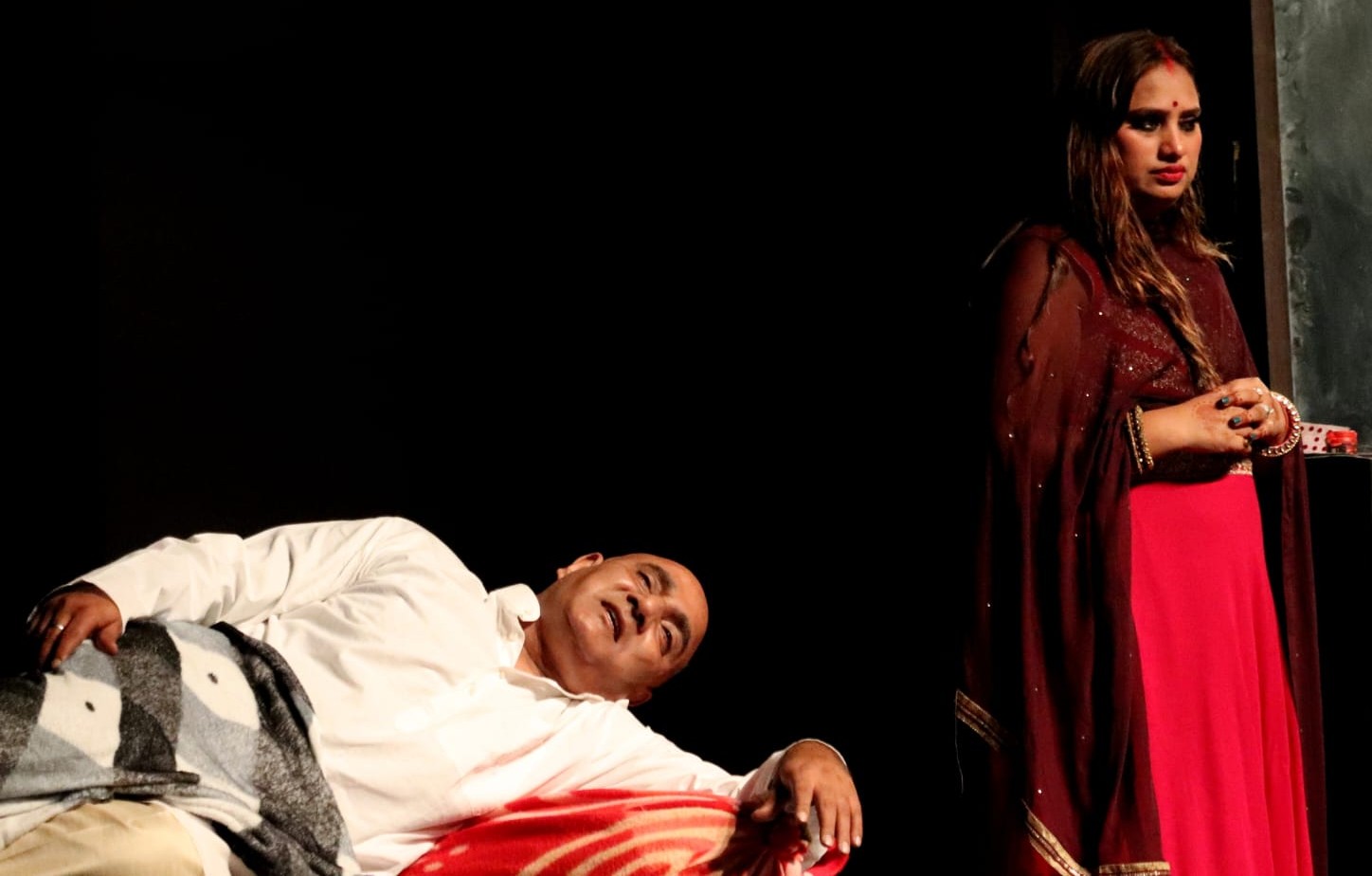
However, this positive assessment was sharply disrupted by the staging of Aaiena, a Hindi production presented under the Saptahik Rangdhara banner. Despite strong appreciation for its content and performances, the play became a flashpoint for criticism over organisational lapses that many theatre practitioners described as unacceptable and damaging.

According to the theatre group, the auditorium was cross-booked on the same day for a school function, leaving the team with barely any access to the stage prior to performance, despite being officially scheduled under JKAACL’s own series. This resulted in denial of technical rehearsals, light and sound checks, and even basic spatial familiarisation. Artists and technicians maintained that the disruption was not due to any lapse on their part but stemmed from poor planning and insensitive prioritisation.
The consequences were evident on the ground. Theatre lovers arrived with anticipation only to be left confused, some forced to wait and others compelled to return without clarity. Actors performed under visible anxiety, technicians worked under pressure, and the morale of the entire team suffered. Months of rehearsal for an hour-long performance were undermined by the absence of a professional and empathetic working environment.
The incident triggered sharp reactions from within the theatre community. Veteran theatre personality Suresh Sharma wrote on social media that several aggrieved and well-known theatre artists had complained to him that JKAACL now “sounds like JACKAL” to them. While congratulating the performing artists for keeping Jammu theatre alive despite official apathy, his remark reflected a deep erosion of trust between practitioners and the institution.
Theatre activist Vijay Dhar, commenting on JKAACL’s official social media page, described the Academy’s approach as immature, non-serious, insensitive and irresponsible, stating that such functioning had pushed the quality of art and culture to its lowest point.
Playwright and director Rajeshwar Singh Raju expressed the strongest condemnation. Reacting publicly, he described the situation as “not theatre but a mockery of theatre,” stating that what should have been a meaningful artistic experience was converted into an exercise in distress purely due to mismanagement. He called for a thorough investigation into how such lapses occurred within JKAACL’s flagship Saturday Series, asserting that practices of this nature do not nurture theatre but systematically erode trust, dignity and the very spirit of cultural commitment. He warned that repeated incidents of this kind would discourage serious practitioners and damage the credibility of institutional platforms.
Significantly, much of the criticism differentiated between intent at the top and failures at the operational level. While the Academy’s broader role and leadership enthusiasm were acknowledged, artists demanded accountability within its administrative structure, particularly in Jammu, where they feel day-to-day planning has grown disconnected from artistic realities.
The Aaiena episode therefore assumes wider significance than a single disrupted performance. It highlights a fragile fault line between institutional continuity and institutional credibility. While 2025 demonstrated that Jammu theatre survives through persistence and community effort, it also showed how quickly poor planning and insensitivity can negate months of artistic labour. As JKAACL moves into 2026, the challenge will be not just to keep stages occupied, but to restore confidence, professionalism and respect for the creative process—without which consistency alone will no longer suffice.