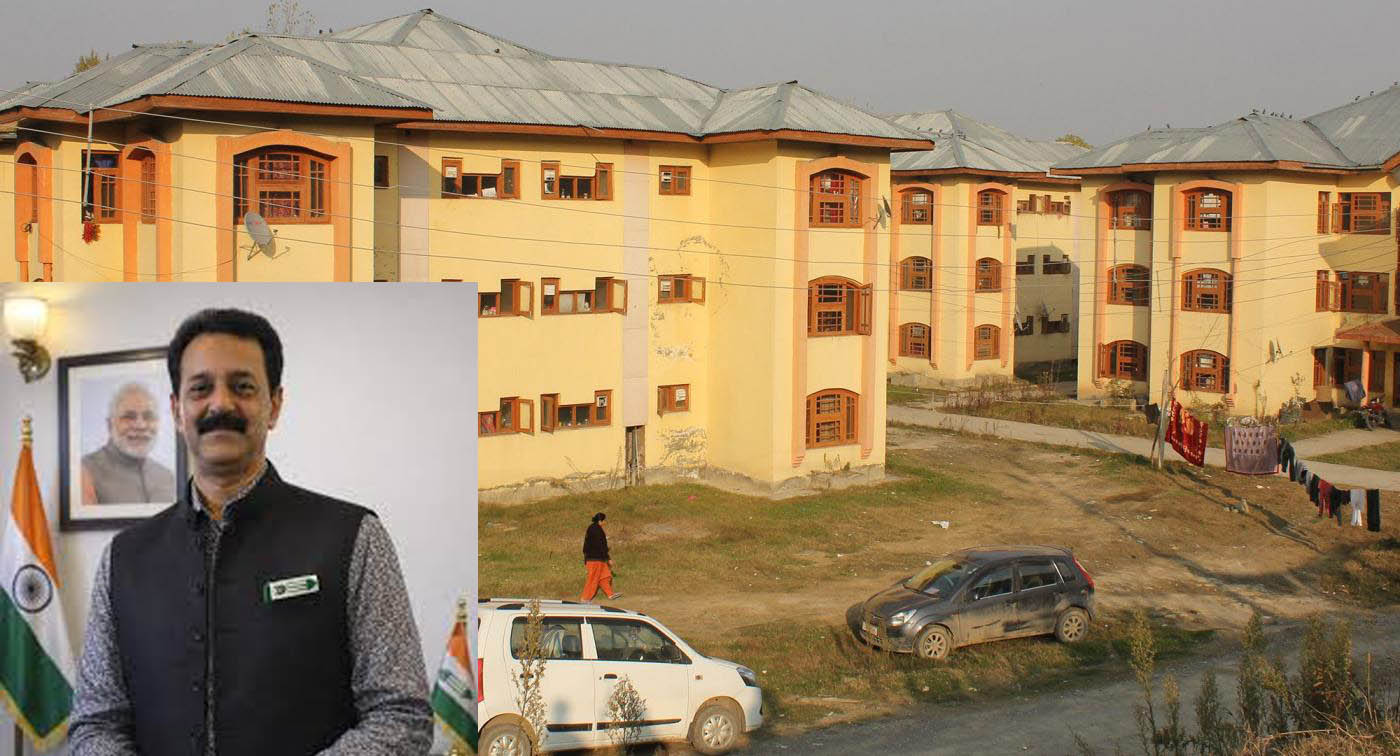
JDU Spokesperson Proposes Massive Rehabilitation Township in Mattan for 3 Lakh Kashmiri Pandits
Strategic Vision Submitted to PMO Advocates for Secure Minority Zone and Restored Political Representation in South Kashmir

 Srinagar, February 24, 2026: Rakesh Handu, Spokesperson JDU (JKUT) on Feb 22, 2026 proposed a comprehensive and visionary rehabilitation plan for the exiled Kashmiri Pandit community and other minorities through the establishment of a massive, self-sustaining township centered in the historic town of Mattan.
In a detailed memorandum addressed to the Prime Minister of India and the Lieutenant Governor of Jammu and Kashmir, Handu emphasized that Mattan, historically known for its world-famous Sun Temple and its status as a pinnacle of communal harmony, offers the ideal geographical and cultural landscape for a large-scale return of the displaced population.
The proposal envisions a modern township with the capacity to house between two to three lakh people, strategically extending from the limits of Hutmara on the Pahalgam road to the areas of Akura and Nambal, and further reaching toward the Qazigund axis.
The activist highlighted the tragic history of the town, noting that while it was once a Hindu-majority enclave, the 1990 outbreak of terrorism forced the community into exile, leaving behind properties that were subsequently gutted, vandalized, or sold under extreme distress.
To rectify this, the proposal suggests that the government should acquire land from original owners who migrated or sold their property in dejection, providing them with compensation at current market rates to facilitate a structured redevelopment.

By utilizing the surrounding natural beauty, water resources, and proximity to existing security infrastructure like the Shangus army cantonment, the JDU spokesperson argues that the government can create a “Gateway to Peace” that does not disturb the local majority population but instead fosters a model of mutual coexistence.
Central to this proposal is the restoration of the minority community’s democratic rights and constitutional agency within the valley. Handu argued that the establishment of such a concentrated and secure township would finally allow the minority community to effectively elect their own representatives to the Legislative Assembly, the Anantnag-Rajouri Parliamentary constituency, and local DDC or BDC bodies.
He urged the Union Ministry of Home Affairs and the UT administration to apply deep strategic thought to this initiative, framing it as a necessary step for those who hold deep allegiance to the Indian Constitution and democratic values.
The plan concludes that such a self-sustaining zone would not only serve as a home for Kashmiri Pandits but would offer a secure environment for all people adversely hit by ongoing regional instability, ultimately rebuilding a pluralistic society in the heart of South Kashmir.